
Views: 0 Author: Site Editor Publish Time: 2026-11-18 Origin: Site


Choosing the right dining tables for restaurants comes down to matching table frame durability, table base style, and surface material to your venue's traffic, decor, and indoor or outdoor setting. Restaurant owners should prioritize commercial-grade pedestal table bases or four-leg frames with powder-coated or brushed finishes, since these withstand daily wear while keeping maintenance low.
Choosing the right dining tables might seem like a small detail compared to menu design or staffing, but it directly shapes how customers experience your restaurant. A wobbly table or a scratched finish can undercut even the best plating, while a sturdy, well-designed table base signals quality before a single dish arrives.
Restaurant owners juggle a long list of priorities: durability, comfort, aesthetics, and budget, all while trying to maintain a consistent look across dozens (or hundreds) of seats. The table base, often overlooked in favor of tabletop material, is actually one of the most important structural and visual decisions you'll make. A dining table base supports constant movement, spills, and cleaning, which means it needs to be engineered for commercial use rather than residential comfort.
This guide walks through the key factors restaurant owners and designers should consider when selecting dining tables, from table frame construction to finish options like the Germany brushed table base style that's become popular in modern restaurant design. Whether you're outfitting an indoor dining room, a rooftop bar, or a garden patio, understanding your table base options will help you make a decision that lasts.
A restaurant table base needs to do more than hold up a tabletop. It has to endure constant use, resist corrosion, and maintain its appearance through years of cleaning and foot traffic. Unlike home furniture, restaurant table bases are typically built from aluminum or steel rather than wood, since metal frames offer superior load-bearing capacity and resistance to moisture.
Three factors determine whether a table base will perform well in a commercial setting:
Material strength: Aluminum table bases are lightweight yet strong, making them easier to move during rearrangements or cleaning, while steel table frames offer maximum stability for high-traffic areas.
Finish durability: Powder coating and brushed finishes, including the Germany brushed table base style, resist scratching and fading better than standard paint.
Base design: Pedestal table bases distribute weight through a single central column, while four-leg frames spread weight across multiple points of contact. Each has tradeoffs for stability and legroom.
The pedestal table base and the traditional four-leg table frame represent the two dominant styles in restaurant furniture, and the right choice depends on your floor plan and seating style.
A pedestal table base works best for restaurants that prioritize guest comfort and flexible seating. Because the support column sits in the center, diners don't have to maneuver around table legs, which matters most at round or square two-tops and four-tops. Pedestal bases also simplify cleaning, since staff only need to navigate one central column instead of four separate legs.
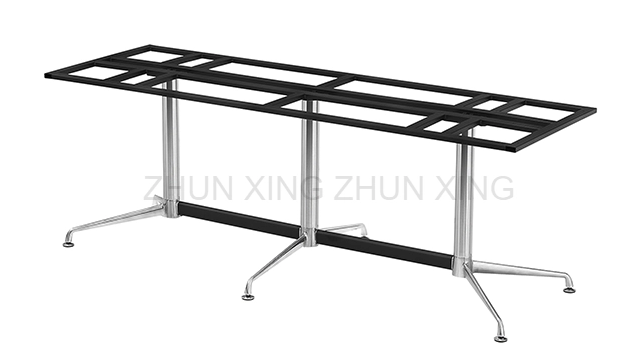
A four-leg table frame, by contrast, offers superior stability for larger tabletops, particularly rectangular communal tables or long banquet-style setups. The wider footprint reduces wobble under heavier loads, which makes this style a better fit for private dining rooms or group seating areas.
Choose a pedestal table base if guest comfort and ease of cleaning matter more than maximum weight capacity. Choose a four-leg table frame if you're outfitting larger tables that need to support heavier tops or accommodate uneven flooring.
Indoor and outdoor seating areas place very different demands on a table base, and choosing the wrong one can shorten the lifespan of your furniture considerably.
Indoor dining tables can use a broader range of materials, since they're shielded from rain, humidity swings, and direct sun exposure. This gives restaurant owners more freedom to choose decorative finishes, like a brushed silver or Germany brushed table base, that might not hold up as well outside.
Outdoor and garden table bases need to handle moisture, temperature changes, and UV exposure without rusting or fading. Aluminum table bases with powder-coated finishes are the standard choice for patios, rooftop bars, and garden seating areas, since aluminum naturally resists corrosion. According to the product specifications listed by table base manufacturer Zhunxing, outdoor-rated table legs are commonly built with aluminum stands and bases paired with iron horizontal tubing and top frames, a combination designed to balance strength with weather resistance.
If your restaurant has both indoor and outdoor seating, consider standardizing on table bases rated for outdoor use throughout the space. This reduces the risk of mismatched furniture lifespans and gives you more flexibility if you ever reconfigure your floor plan.
Table Base Type | Best For | Material | Key Advantage |
|---|---|---|---|
Pedestal table base | Round and square 2-4 top tables | Aluminum or cast iron | Maximizes legroom, easy to clean |
Four-leg table frame | Rectangular and communal tables | Steel or aluminum | High weight capacity, added stability |
Coffee table base | Lounge and bar seating areas | Aluminum or iron | Lightweight, versatile height options |
Garden table base | Outdoor patios and rooftop seating | Powder-coated aluminum | Weather and corrosion resistant |
Brushed metal table base (e.g., Germany brushed finish) | Upscale indoor dining rooms | Stainless steel or aluminum | Premium appearance, scratch-resistant |
The finish on a table base affects both appearance and longevity, which makes it a decision restaurant owners shouldn't rush.
A Germany brushed table base finish creates a textured, matte metallic look that hides fingerprints and minor scuffs better than glossy finishes. This style has become popular in contemporary restaurant design because it pairs well with both industrial and upscale aesthetics, giving owners flexibility without needing to commit to a single design direction.
Powder-coated finishes, meanwhile, prioritize durability over visual texture. These finishes bond to the metal surface, creating a protective layer that resists chipping, which is particularly valuable for outdoor restaurant table bases exposed to rain and sun.
When comparing finishes, factor in your cleaning routine too. Brushed finishes typically require less maintenance to look presentable between deep cleans, since minor marks blend into the texture rather than standing out the way they would on a smooth, polished surface.
Your restaurant's table frame choice should align with your seating density and service style. Fast-casual restaurants that turn tables quickly often benefit from lightweight aluminum table frames that staff can reposition easily for larger groups. Fine dining establishments, which prioritize a polished and stable guest experience, tend to favor heavier steel table frames or pedestal bases with reinforced centers.
Before finalizing your table base order, measure your floor plan carefully and account for walkway clearance between tables. A table frame that looks proportionate on paper can create cramped aisles once chairs are pushed in, which affects both guest comfort and staff efficiency during service.
Selecting the right dining table base is a decision that touches nearly every aspect of your restaurant, from guest comfort to daily operations and long-term maintenance costs. Pedestal table bases offer flexibility and easy cleaning, four-leg table frames provide stability for larger tables, and finishes like the Germany brushed table base style add a refined look that holds up to daily wear.
Before placing a bulk order, request samples of your shortlisted table bases and test them in your actual dining space under real conditions, including typical foot traffic and cleaning routines. A table base that performs well in a showroom should also prove itself under the pace of a working restaurant floor.
What is the most durable table base material for restaurants?
Aluminum and steel are the two most durable table base materials for commercial use. Aluminum resists corrosion and works well for both indoor and outdoor tables, while steel offers additional weight capacity for larger tabletops.
How much does a restaurant table base typically cost?
Pricing varies widely based on material, finish, and customization, with basic aluminum pedestal bases costing less than custom brushed or powder-coated steel frames. Restaurant owners should request quotes directly from manufacturers based on their specific table dimensions and finish preferences.
Can the same table base be used indoors and outdoors?
Some table bases, particularly powder-coated aluminum designs, are rated for both indoor and outdoor use. However, bases combining aluminum with untreated iron components are generally better suited to indoor or covered settings, since iron is more prone to rust.
What's the difference between a coffee table base and a dining table base?
A coffee table base is shorter and typically designed for lounge or bar seating areas, while a dining table base is built to standard table height for meal service. Both can share similar materials and finishes, but their proportions differ to match their intended use.
Who should consider a custom table base over a standard one?
Restaurants with unique floor plans, branded design requirements, or nonstandard tabletop sizes often benefit from custom table bases. Manufacturers that offer customized sizing and finishes can help restaurant owners achieve a specific aesthetic while still meeting commercial durability standards.


