
Views: 0 Author: Site Editor Publish Time: 2026-11-09 Origin: Site


Most pedestal dining tables comfortably seat 4 to 6 people, with round tables under 48 inches suited for 4 and larger round or oval designs supporting 6 to 8. The base material and construction matter as much as tabletop size — a powder-coated steel or aluminum dining table base provides the stability needed to support larger tabletops without a bulky center column crowding diners' legroom.
Choosing a pedestal dining table isn't just about picking a style you like. Seating capacity determines everything from the diameter of your tabletop to the strength of the dining table frame holding it up. Get this wrong, and you'll either end up with a table that feels cramped during family dinners or one so oversized it dominates the room.
Whether you're a homeowner furnishing a dining nook, an interior designer specifying furniture for a client, or a restaurant owner outfitting a dining room, the seating capacity of your pedestal table shapes the entire purchasing decision — from tabletop shape to the type of dining table base that will hold it steady for years of daily use.
This guide breaks down how many people different pedestal table sizes can seat, what to look for in a dining table base to support that capacity safely, and how material choices like powder coating affect durability for both indoor and outdoor settings.
Seating capacity on a pedestal table depends primarily on tabletop shape and diameter, not the base design itself. Round and square tables with a single central support generally seat fewer people than rectangular tables with a double-pedestal or trestle base, simply because there's less edge space to work with.
Here's a general breakdown of seating capacity by tabletop size and shape:
Tabletop Shape | Diameter / Dimensions | Typical Seating Capacity |
|---|---|---|
Round | 36–42 inches | 4 people |
Round | 48–54 inches | 4–6 people |
Round | 60 inches | 6–8 people |
Square | 36 x 36 inches | 4 people |
Square | 44 x 44 inches | 4–6 people |
Oval | 60 x 42 inches | 6 people |
Oval | 72 x 42 inches | 6–8 people |
Rectangular | 60 x 36 inches | 6 people |
Rectangular | 72–84 x 36–40 inches | 8 people |
As a general rule, each diner needs roughly 24 inches of edge space to sit comfortably without elbowing their neighbor. For round tables specifically, divide the circumference by 24 inches to estimate how many chairs will actually fit.
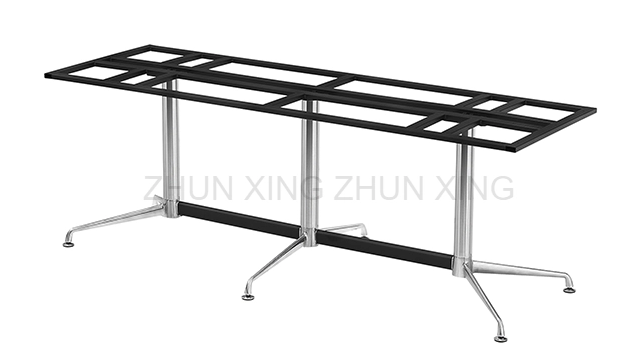
A tabletop is only as functional as the dining table base supporting it. Larger tabletops designed to seat 6 or more people place significant weight and leverage stress on the base, particularly at the point where the stand tube meets the top frame.
This is where the construction of the base becomes critical. A well-engineered pedestal base typically combines:
A weighted base (often aluminum) for stability and resistance to tipping
A stand tube (aluminum or steel) that forms the vertical support column
A horizontal tube and top frame (often iron) that distributes the tabletop's weight evenly across the base
For tables seating 6 or more, many manufacturers reinforce this structure or move to a double-pedestal or trestle-style dining table frame instead of a single column, since a single pedestal can struggle to support the torque created by a long tabletop with diners seated at both ends.
Powder coating itself doesn't change weight capacity, but it significantly affects the base's long-term durability — which matters more as seating capacity (and therefore daily use) increases. A powder-coated table base resists scratches, corrosion, and fading far better than a painted or untreated metal surface, which is especially important for tables that see heavy daily traffic, like those seating 6–8 people in a family or restaurant setting.
For restaurant table bases in particular, powder coating is close to an industry standard. Commercial dining rooms turn tables over dozens of times a day, and a base that chips or rusts after a year of use becomes a liability. The same logic applies to a garden table base exposed to rain, sun, and temperature swings — powder coating creates a protective layer that keeps metal round table legs looking sharp and performing reliably season after season.
Yes, and the distinction matters more than many buyers expect. Indoor dining table bases prioritize aesthetics and can use a broader range of finishes, since they're shielded from weather. Outdoor and garden table base options, by contrast, need materials engineered specifically for exposure — typically powder-coated aluminum or galvanized steel — to prevent rust from compromising the base's ability to safely support a full table of diners over time.
If you're outfitting a patio or restaurant terrace designed to seat 6–8 guests, look for a garden table base rated for outdoor use with UV-resistant, weatherproof coating. Skimping here often means replacing the base within a couple of seasons, regardless of how well the tabletop itself holds up.
While they may look structurally similar, a coffee table base and a dining table base are engineered for different loads. Coffee table bases support lower weight (drinks, books, decor) at a shorter height, while dining table bases must support place settings, serving dishes, and the downward pressure of diners leaning on the table edge — all at standard dining height (around 28–30 inches).
This distinction matters if you're sourcing furniture components separately from the tabletop. A base built for a coffee table generally shouldn't be repurposed for a dining table seating 6 or more, since it isn't rated for the same load distribution or height-to-stability ratio.
Contemporary metal table bases are increasingly designed with adjustable or modular configurations, allowing the same base family to support different tabletop sizes and, by extension, different seating capacities. Many manufacturers offer a single base model — like a four-star or five-star leg design — that scales from a 4-seat round table to a 6-seat oval, simply by adjusting the top frame dimensions.
This flexibility is particularly useful for restaurants and commercial buyers who need consistent styling across a space but varying table sizes for booths, two-tops, and larger party seating.
If you're furnishing a small breakfast nook for two to four people, a single-pedestal round table with a compact aluminum base is typically sufficient. If you're seating a family of six or hosting dinner parties regularly, consider a larger round or oval tabletop paired with a reinforced base and wider stand tube. For restaurant or outdoor applications seating 6–8 guests, prioritize a powder-coated dining table base built specifically for commercial or weather-exposed use.
Matching your tabletop's seating capacity to a base engineered for that load — and finished appropriately for its environment — is the difference between a table that lasts for years and one that needs replacing within a season.
How many people can a 48-inch round pedestal table seat?
A 48-inch round table typically seats 4 to 6 people comfortably, depending on chair width and how much elbow room diners prefer.
Is a single pedestal base strong enough for a 6-seat table?
A single pedestal can support a 6-seat round or square table if the base and top frame are properly reinforced, but rectangular tables seating 6 or more often perform better with a double-pedestal or trestle base to prevent tipping.
What's the best base material for an outdoor dining table?
Powder-coated aluminum or galvanized steel are the best choices for outdoor and garden table bases, since they resist rust and UV damage better than untreated metal.
How much space should I leave between chairs at a pedestal table?
Aim for roughly 24 inches of edge space per diner, which allows comfortable elbow room without chairs touching.
Can the same table base work for both dining and coffee tables?
Not typically. Dining table bases are built to standard dining height and higher load tolerances, while coffee table bases are shorter and designed for lighter use.


